
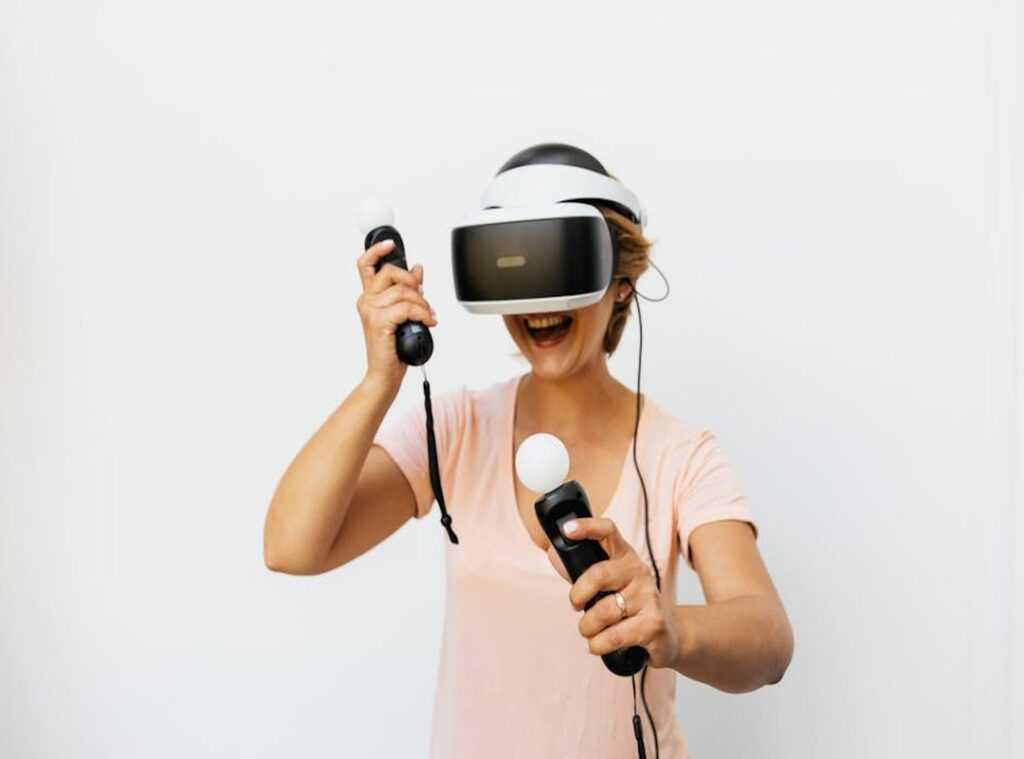
Ever had a game feel so real your living room vanished? You know the one (where) you’re in it, not just watching it. But let’s be honest, “immersion” gets tossed around like cheap confetti in gaming.
It’s a buzzword, but what does it truly mean? Separating the genuine from the hype is a challenge. I’ve spent years dissecting the tech and mechanics behind these experiences.
Why should you care? Because understanding this helps you spot the real deal in virtual reality gaming. You’ll know what’s new and what’s just noise.
I promise, this isn’t another fluffy guide. We’ll break down the tech, highlight games that get it right, and peer into the future of immersive gaming. Ready to dive in and truly understand digital immersion?
Let’s go.
Beyond Graphics: Four Pillars of Digital Immersion
When people think about virtual reality gaming, they often get stuck on one thing: graphics. Sure, pixel-perfect visuals are cool, but it’s far from the whole picture. Let’s break it down into four pillars that make games truly immersive.
Visual Fidelity goes beyond eye candy. Ray-traced lighting, high-fidelity textures, and high frame rates help create a world that feels not just real but behaves realistically. Have you ever noticed how shadows shift naturally or how the light reflects off surfaces? That’s what I’m talking about.
Then there’s Auditory Presence. This is where spatial and binaural audio come into play. Picture this: you’re sneaking around, and you hear footsteps behind you, not just anywhere, but to your left and slightly behind.
That’s the kind of sound design that builds tension and belief in the world you’re exploring.
Next up is Haptic & Physical Feedback. We’ve come a long way from simple controller rumbles. Think of the PS5 DualSense’s adaptive triggers making you feel the tension of a bowstring or the texture of a gritty surface.
It adds a whole new layer to your experience. (And yes, it’s as cool as it sounds.)
Finally, there’s Psychological Flow. This is less about technology and more about design choices (narrative) coherence, intuitive UI, and gameplay loops that suck you in until you forget you’re playing. These elements are the glue holding all the tech wonders together.
Want to see how these pillars stack up in upcoming games? Read more about the 2023 most anticipated game launches. Get ready to step into worlds more immersive than ever.
The Core Technologies Fueling Immersion
Virtual reality gaming is no longer just a sci-fi dream. It’s here, and it’s wild. The concept of “presence” is what truly hooks you.
VR tricks your brain into thinking you’re somewhere else entirely. But there’s a difference. While VR fully immerses you in a digital world, augmented reality (AR) blends the real with the virtual.
It’s like having digital overlays on the real world. You can explore vr gaming experiences to see how these technologies are pushing boundaries.
Now, let’s talk sound. Spatial audio is a game-changer. Technologies like Dolby Atmos and Tempest 3D AudioTech don’t just play sound.
They craft it into 3D objects. Imagine hearing a plane fly overhead or footsteps sneaking up behind you. It’s intense and adds a layer of realism stereo channels can’t touch.
On to touch. Next-gen haptics take feedback further. Think beyond ordinary controllers.
I’m talking about haptic vests and suits from companies like bHaptics and Teslasuit. These devices provide directional feedback. Feel a punch from the left or an explosion from behind.
It’s not just about gaming anymore. It’s about feeling the game.
Graphics are evolving too. Real-time ray tracing simulates how light behaves in the real world. It’s about reflections, shadows, and global illumination.
Path tracing takes it a step further, offering even more realism. It’s like stepping into a painting, but everything reacts as it should. This tech is a game-changer for realism.
So, why does any of this matter? Because the line between reality and virtual is blurring. And it’s only getting more intense.
The tech behind this revolution isn’t just about playing games. It’s about redefining what experiences can be. And that’s something worth paying attention to.
Games That Nail Immersion: A Deeper Dive
Let’s start with Half-Life: Alyx. You think virtual reality gaming can’t get any more immersive? Think again.

This game redefines it. The way you manually reload guns or push objects aside (it’s) like you’re actually there. The physics-based interactions make you forget you’re in a living room.
You’re in City 17, fighting for your life. It’s a benchmark for VR. Remember the exploring gamings impact culture?
Now, let’s talk about Hellblade: Senua’s Sacrifice. You put on those headphones, and suddenly, you’re not just playing a game. You’re inside Senua’s mind.
This is it in action, pulling you in deeper.
The binaural audio isn’t just for show. It’s a core mechanic. Whispers surround you, taunting, guiding, confusing.
It’s not just sound; it’s storytelling. You feel her struggle. It’s haunting.
It’s solid. And it keeps you glued to the screen. Ever wonder what it’s like to hear voices?
This game is your answer.
Finally, we have Cyberpunk 2077 with path tracing. Night City never looked so real. Turn on full ray tracing, and it’s like stepping into a dystopian future.
Neon signs reflect in puddles. Light filters through windows with uncanny realism. It’s a visual feast.
This isn’t just about pretty graphics. It’s about grounding you in a world that’s almost too real. You can’t help but get lost in it.
Is it perfect? No. But when it works, it transports you.
Each of these games takes immersion to another level. Whether it’s through VR, audio, or stunning visuals, they each have a lesson to teach. They show what happens when technology meets storytelling in a way that pulls you in and doesn’t let go.
So, what’s next? Will future games push these boundaries even further? If these examples are anything to go by, we’re in for a wild ride.
And honestly, I can’t wait to see where this journey takes us next.
The Next Frontier: Immersive Gaming’s New Era
Virtual reality gaming is about to get a massive upgrade. Imagine NPCs that don’t just follow a script but react dynamically to your every move. Generative AI can make this a reality, making every game session a unique experience.
It’s not just about pre-programmed paths anymore; it’s about games adapting to you.
And let’s talk about haptic suits. These aren’t just sci-fi dreams. Full-body suits can make you feel every punch, every gust of wind, right in your living room.
They’re going mainstream faster than you think. Bringing the game world to your physical world is the next big leap.
Then there’s Brain-Computer Interfaces. Yes, it’s far off, but the idea of direct sensory input is tantalizing. Imagine playing a game by thought alone.
It’s not around the corner, but it’s out there waiting. The future of gaming is more than just a screen. It’s an experience.
Dive Into Your Next Reality
You’re ready now. Equipped to cut through all the noise, you know what makes a game truly immersive. The pillars of immersion (visual, audio, haptic, psychological) are your guide.
No more falling for flashy marketing tricks. You can spot genuine virtual reality gaming experiences.
Remember how lost you felt in that first game? Let’s relive that. Share your most immersive gaming moment in the comments below.
Your takeaways might just help someone else find their next escape. What are you waiting for? Dive back in.
Rediscover the magic. And if you’re stuck, we’re here to guide you.